

Trend # 1: Gallium Nitride (GaN) – How it shapes the next generation defence electronics.
GaN is a next generation wide-bandgap semiconductor material that is incredibly strong and mechanically stable. GaN is primarily used for radio frequency (RF) devices (power amplifiers, transmitters) and power electronics (high-efficiency converters) and has become a gamechanger for military applications, as it allows systems to operate in harsher environments with far greater efficiency than earlier technologies.
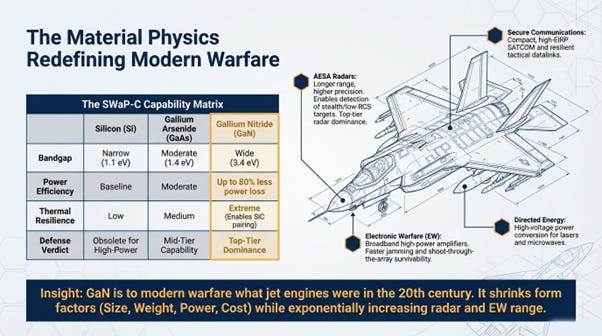
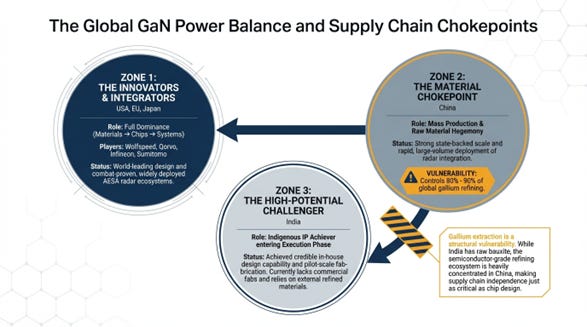
After being denied access to this strategic technology by foreign suppliers (notably in 2016 regarding the Rafale deal), India has made massive strides in self-reliance in GaN technology. GaN is foundationally critical for military supremacy. It is important to understand the global GaN Power balance and the supply chain ecosystem/chokepoints and where India currently ranks in this chain.
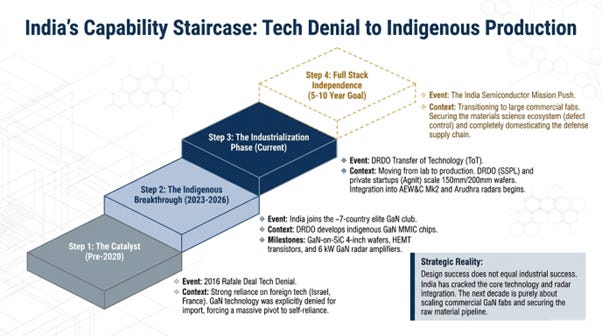
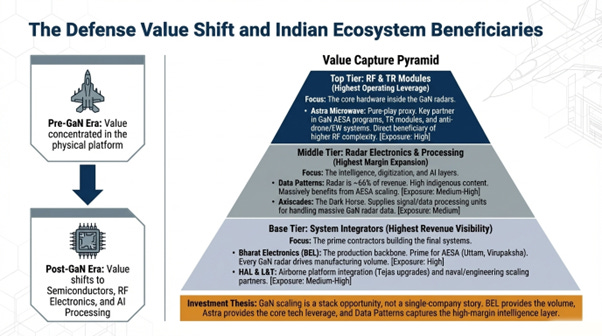
While India has cracked the GaN technology and has worked the radar integration, the scale and depth of the semi-conductor ecosystem in the next decade will be critical for India to catch up with the big-league international players. Here is a layout of the Indian beneficiaries that are listed.
Trend # 2: Continuously Transposed Conductors (CTC) - The irreplaceable, high moat component powering India’s 500 GW green energy grid and data center expansion
Continuously Transposed Conductors (CTC) are specialized electrical conductors used primarily in high-capacity transformer windings. CTCs are made of several dozen enamelled rectangular copper strands, arranged in a specific “transposed” pattern. The India Transformer market size is expected to grow from USD 3 billion in 2025 to USD 3.25 billion in 2026 and is forecast to reach USD 4.82 billion by 2031 at 8.22% CAGR over 2026-2031.Rapid grid modernization, peak demand growth, and government funding collectively drive this growth path
Would it be worth playing a perfect proxy to the Indian transformer growth by looking at a high – precision niche product?
Let’s first understand the demand drivers and entry barriers if any:
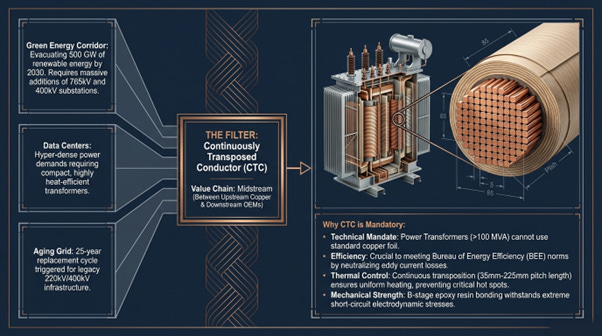
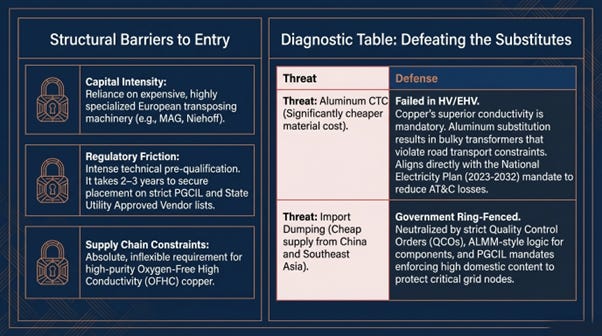
While India faces a moderate import threat from China and Southeast Asia in CTC, government has implemented Quality Control Orders (QCOs) and “Approved Models and Manufacturers” (ALMM)-style logic for transformer components to ensure that critical grid infrastructure isn’t dependent on low-quality imports. Most Power Grid Corp of India Ltd tenders now mandate high domestic content.
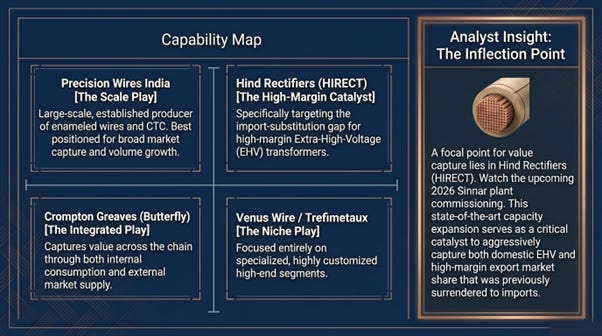
Here are some listed names that are worth tracking in this area:
Trend # 3: The Iran War, China’s power grid resilience and lessons for India
The current war between US/Israel and Iran and the restricted movement of oil & gas through Strait of Hormuz raises an important question. Are the two big southeast Asian economies too reliant on supply from the middle east? Is China’s grid resilient to supply shocks and how does India compare with China and what lessons can India learn from China to solidify its grid structure.
Let’s understand the current energy security story of China:
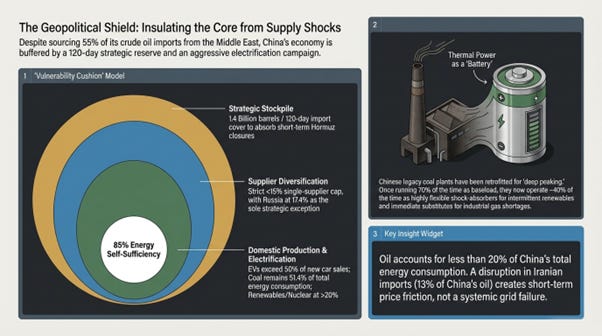
China has significantly insulated its economy through a massive expansion of renewable energy, achieving over 100 GW of new battery storage and investing heavily in ultra-high voltage transmission lines to connect western green power to eastern industrial hubs.
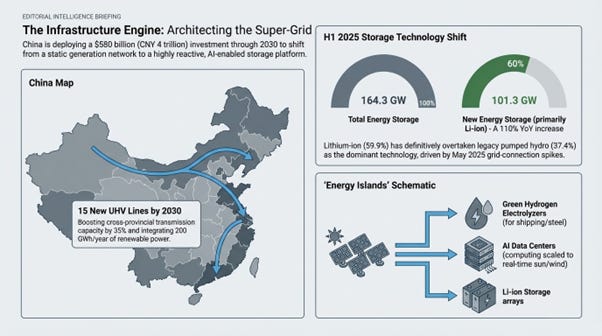
While Beijing maintains a high level of energy self-sufficiency via domestic coal and vast crude oil stockpiles, India remains more structurally fragile due to its heavy dependence on imports transiting the Strait of Hormuz. Both nations are aggressively pursuing electrification, green hydrogen missions, and infrastructure modernization to decouple their economic growth from fossil fuel shocks.
Currently, India is considered a “laggard” compared to China’s “leader” status in grid management.
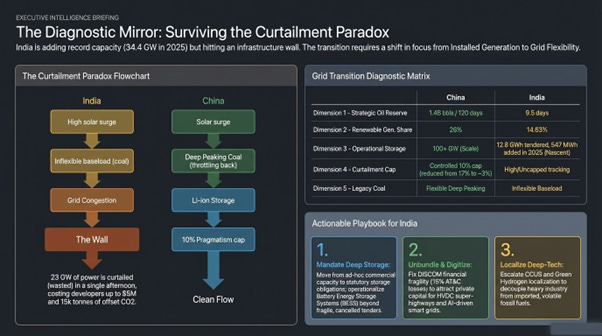
There is no single “best” source for India now but rather - a diversified, non-fossil baseload is India’s most credible defence against energy shocks. This includes Renewables (Solar and Wind), nuclear energy through Small Modular reactors (SMRs), using Green Hydrogen as a vital “de-risking” tool for heavy industries like steel and fertilizers, substituting imported natural gas with domestically produced clean molecules and continued progress on Biofuel (Farm-to-Fuel) through its Ethanol Blended Petrol (EBP) program provides a domestic cushion against volatile international crude markets, having reached a 20% blending target in late 2025.
Information cited in this write up are from investor presentations, annual reports, credit reports and other publicly available information. The content provided is for informational and educational purposes only and not personalized financial, investment, or trading advice.